Share the page
How does AFD support the energy transition away from fossil fuel dependence?
Published on
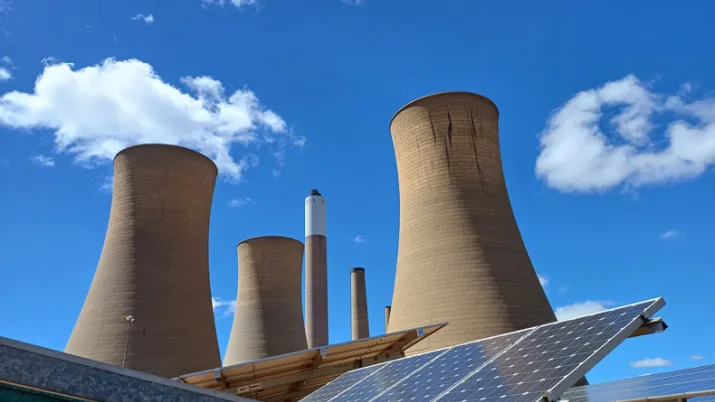
In response to energy price volatility and supply tensions, dependence on fossil fuels is emerging more than ever as a source of vulnerability.
To address this, Agence Française de Développement (AFD) supports its partners in building clean, more resilient energy systems that are less exposed to external shocks.
Current crises are a reminder of how dependence on fossil fuels can leave countries vulnerable, especially when supply depends on a small number of shipping routes, external refining capacity, or highly volatile markets.
Beyond the climate challenge, this dependence exposes economies to price spikes, weakens public finances, and affects daily life, particularly in importing countries with limited fiscal room for maneuver.
“Reducing dependence on fossil fuels is not only a climate imperative – it is a strategic choice. It is a way to strengthen energy security, economic resilience, and countries’ sovereignty all at once. To achieve this, action is needed on three fronts: better managing consumption, developing lower-carbon energy, and making power grids more robust,” explains Nicolas Guichard, Head of Energy Division at AFD.
Producing cleaner energy
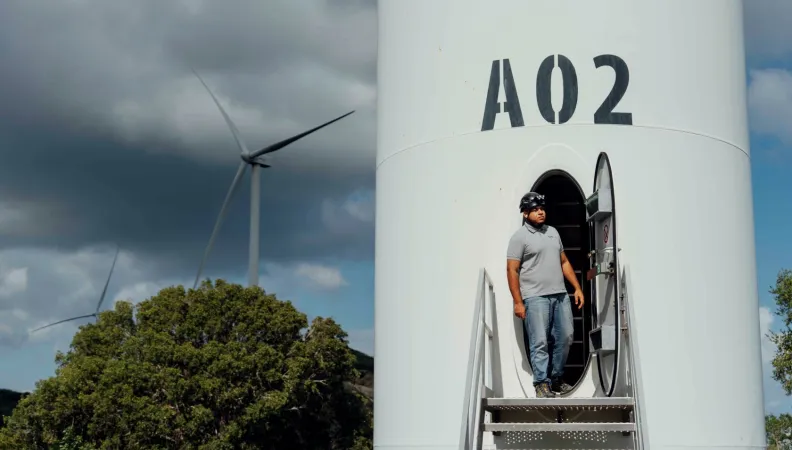
One of the main levers is, of course, the development of renewable energy. Solar, hydropower, wind, and geothermal energy enable countries to generate lower-carbon electricity locally and reduce dependence on imported fossil fuels.
In many countries, this is a decisive issue. Expanding access to cleaner energy both prepares for the future and meets immediate needs. AFD finances projects that increase the share of low-carbon electricity in the energy mix, taking into account local conditions and countries’ priorities.
In Côte d’Ivoire, the Wasuna program illustrates this approach. Signed on 2 April, it combines the rehabilitation of six hydropower facilities, the construction of two solar power plants, and the installation of battery storage systems. The goal is to make electricity more reliable and less dependent on fossil fuels that have become very costly. Ultimately, 9 million people will benefit from more secure access to electricity.
Modernizing grids to integrate renewable energy
Producing more renewable electricity is not enough – it must also be integrated into the grid reliably, especially when it is variable, as with wind and solar power. “Grids and storage are strategic infrastructure: without them, there can be no sustainable energy transition, because there is no power system capable of integrating large-scale renewable energy,” says Nicolas Guichard.
In Senegal, the laying of the foundation stone for the Diass battery energy storage facility on 31 March reflects this ambition. This future installation, the largest in West Africa, will help better integrate solar power into Senelec’s national grid. Its role is straightforward: reduce outages, stabilize the grid, improve service quality, and limit reliance on backup thermal power generation.
Energy resilience is also built at the regional level: “Interconnections between several countries make it possible to pool generation capacity, absorb shocks, and reduce dependence on imports or isolated infrastructure. By supporting the development of regional grids such as the West African Power Pool and the Eastern African Power Pool, AFD helps countries build a more collective and more robust form of energy security in the face of crises,” according to Nicolas Guichard.
Reducing energy waste
Strengthening power systems also means consolidating public utilities, regulators, and governance frameworks. When fuel prices rise, the finances of both electricity companies and governments come under strain. AFD therefore supports reforms aimed at reducing losses, improving the sector’s financial sustainability, and better protecting the most vulnerable households.
In a context of rising energy prices, energy efficiency is often one of the fastest and most cost-effective ways to reduce dependence on fossil fuels. Improving building insulation, upgrading equipment, better managing consumption, or reducing losses across networks – all these actions contribute to the transition.
Regaining control
Amid recurring crises, reducing dependence on fossil fuels also means gaining greater sovereignty, stability, and capacity to act. Replacing one power plant with another is not enough. It requires action across multiple links in the value chain: generation, grids, storage, and also – and above all – the way energy is consumed.
By supporting both concrete projects and broader transformations of energy systems, AFD helps its partners build models that are cleaner and less vulnerable to crises.