
Share the page
Niger
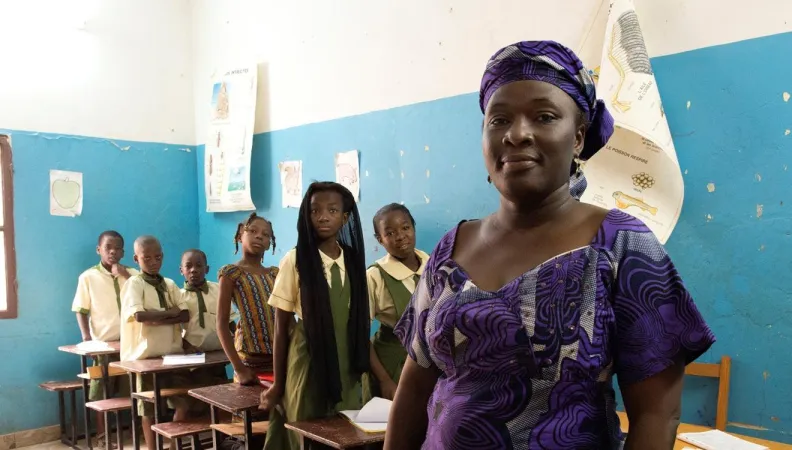
At the heart of the Sahel, Niger is one of the poorest countries in the world. Landlocked and exposed to extreme climatic conditions, it faces the challenges of rapid population growth and regional security instability. The country nevertheless has key assets, including diversified natural resources and strong agricultural potential. AFD has supported Niger in priority sectors: food security and rural development, education, water, and energy.
In light of the evolving political situation, the French Ministry for Europe and Foreign Affairs announced on 29 July 2023 the suspension of France’s Official Development Assistance to Niger. AFD subsequently suspended all new financing in the country and is in the process of closing almost all the projects it had been funding in Niger.
Context
Our approach
AFD and Niger: reducing poverty and promoting education for young people
The current security crisis has undermined the capacity of the Nigerien State to carry out its governing duties. To strengthen the governance of public institutions and assist the nationwide deployment of the State, AFD is financing a project to support the justice system and a project to support the State and public services, with a focus on vulnerable areas (Diffa and Tillabéri).
AFD has also undertaken to support the domestic resource mobilization component of the public finance reform, with a €30 million policy-based grant and a technical assistance project.
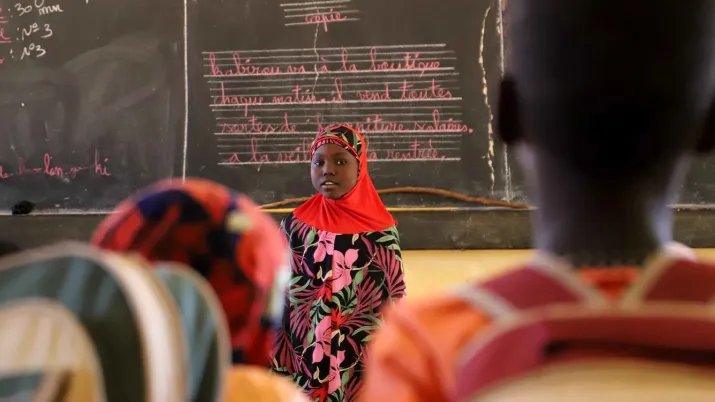
Population growth poses a major challenge in Niger, especially in terms of access to education. To address this challenge, AFD is assisting the Government of Niger with the implementation of its education policy. Our position is based on a dual program-and-project approach. Our programs support the entire education system through partnerships via the Education Sector Common Fund (FSCE). In addition, our projects provide financing in crisis areas or for innovative operations to prepare responses to the country’s development challenges. AFD is also financing two vocational projects in the Diffa region and the Agadez region.
In terms of health, Niger’s healthcare system does not have sufficient resources to meet the needs of the population. Limited access to healthcare facilities, the wide disparity in services between urban and rural areas and the shortage of human resources seriously undermine healthcare provision. AFD has always provided continuous support in areas such as maternal and child healthcare, and access to sexual and reproductive health rights. This support is mainly provided through the Common Health Fund, set up in 2006 by AFD and the World Bank.
Situated in the heart of the Sahel, Niger is a desert country. Access to water is hindered by the marked lack of dedicated infrastructure. In addition, there are major disparities between urban and rural areas. To address the major challenges facing the sector, in 2017, Niger adopted programs to increase access to water and sanitation. To support these policies, AFD has provided several grants to the Niger Water Heritage Company (SPEN) and Ministry of Water Resources, respectively for drinking water in Niamey and in the city of Tillabéri.
In terms of energy, the country has significant potential, but less than 20% of households have access to electricity. To address a growing energy demand, the country has launched major power generation and distribution projects. The objective is to diversify the energy mix of electricity production and secure the supply. AFD is supporting the development of the energy sector, with a focus on renewable energy through generation, extension and management projects for power grids in urban and rural areas (hybrid power plant in Agadez, solar power plant in Gorou Banda).
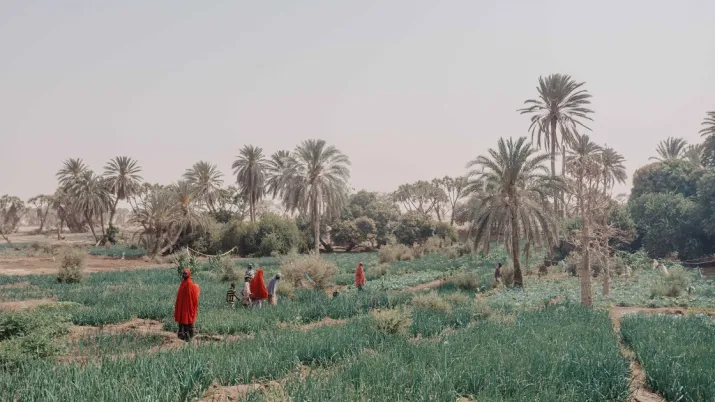
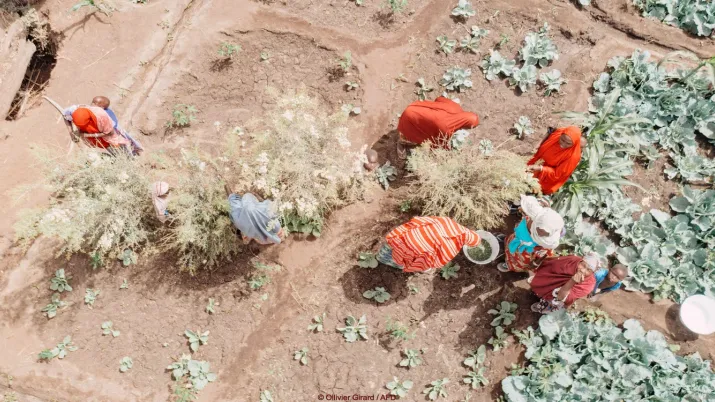
In Niger, the malnutrition rate is particularly high: 15% of children under the age of 5 suffer from acute malnutrition. In 2012, the Government of Niger adopted a strategic framework for Food and Nutritional Security and Sustainable Agricultural Development (SAN/DAD), known as the 3N Initiative: “Nigeriens nourishing Nigeriens”. The objective for 2035 is to ensure that the country's inhabitants are protected from hunger and malnutrition over the long term and to provide them with opportunities to work and increase their income.
With 16 projects currently underway (11 national projects amounting to €180 million and 5 regional projects for €40 million), AFD is helping to improve food security in almost all of Niger's regions, through:
- Local and territorial development
- Natural resource management and the development of production in the agro-sylvo-pastoral sector
- Institutional support for operators involved in the prevention and management of food crises
News & Press Releases
Publications & Media
Key figures
-
65+ years of partnership between Niger and AFD
-
Over 1 million people benefited from improved access to electricity in 2021
-
Over 2 million people benefited from an improved drinking water service in 2021