
Share the page
Mauritania
Published on
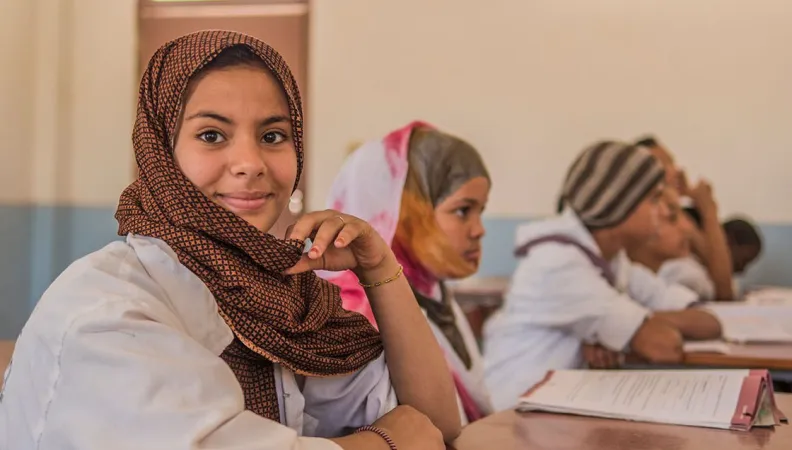
A bridge between the Maghreb and sub-Saharan Africa, Mauritania is a large and diverse country, home to 5 million people across more than one million square kilometers. It is rich in natural resources but remains vulnerable to climate, economic, and social shocks, as well as refugee inflows.
AFD Group’s activities align with the country’s National Development Strategy (2016–2030), which aims to strengthen the rule of law, promote sustainable economic growth, improve youth training, and expand access to basic services.
Context
Mauritania is classified both as a lower-middle-income country by the World Bank and as a Least Developed Country by the United Nations. In 2024, its GDP was €9.9 billion, or €1,941 per capita.
Mauritania’s growth is driven by the extraction of iron and gold, fishing, livestock farming, and a large offshore gas field shared with Senegal that began production in 2025. However, the economy remains vulnerable to climate shocks and market fluctuations. The country is already facing the full impacts of climate change – including desertification in inland areas, coastal erosion and marine flooding, increasing pressure on natural resources, and rising land-use conflicts. These trends are accelerating rapid urbanization in a socially fragile context. Compounding these challenges are complex migration dynamics, including the arrival of refugees in the east and transit routes toward Europe in the west, which further weaken a country ranked 7th globally in multidimensional vulnerability. Young people and women are especially affected.
A historical partner of Mauritania since 1978, AFD has supported the country for over 45 years in strengthening social cohesion, expanding essential services, and promoting inclusive and resilient growth.
Its interventions align with the Strategy for Accelerated Growth and Shared Prosperity (SCAPP) 2016–2030 and are structured around four complementary strategic pillars:
- Strengthening human capital and population resilience
- Promoting rural development and territorial resilience
- Supporting governance and the rule of law
- Stimulating economic dynamics
The AFD Mauritania country office is attached to the Greater Sahel Regional Office.
Our approach
AFD Group and Mauritania: strengthening cohesion, developing territories, supporting growth
AFD places young people, women and vulnerable populations at the center of its action. It supports access to education, vocational training and economic inclusion, in particular through entrepreneurship, as well as the development of active citizenship.
AFD also promotes cultural and sports initiatives as drivers of social cohesion and conflict prevention. In fragile rural areas – notably the Senegal River Valley and Hodh ech Chargui – it helps strengthen resilience to food and climate crises, including through the national cash-transfer mechanism designed to support households during the lean season.
AFD supports the balanced development of rural, urban and natural areas. It strengthens the capacity of local authorities to lead territorial transformation, to manage natural resources sustainably (water, agriculture, livestock) and to expand access to basic services such as education and health. It also contributes to restoring natural ecosystems (Great Green Wall, wetlands, marine biodiversity) in response to climate change and unplanned urbanization.
In urban areas, AFD promotes sustainable and inclusive planning to improve living conditions in a context marked by rapid demographic growth and accelerating rural-to-urban migration.
AFD supports public enterprises in the water and sanitation sectors (SNDE, ONSER, ONAS), energy (SOMELEC), agriculture (SONADER) and mining (SNIM) to improve their performance and finance their investments. It also contributes to modernizing the governance of public enterprises, where conditions allow. All of these actions reflect strong climate ambitions, through low-carbon and climate-resilient infrastructure.
AFD is committed to supporting the country’s macroeconomic stability in the face of increasing climate-related risks. It may contribute to the development of innovative financial mechanisms (climate insurance, rapid-response instruments, fiscal preparedness tools) that help the State better anticipate, absorb and manage shocks. It may also support structural reforms aimed at strengthening domestic resource mobilization, improving the quality of public spending and integrating climate risks into budget planning.
In the field
Below, find the country's projects, news, publications, and contact details in one click.
News & Press Releases
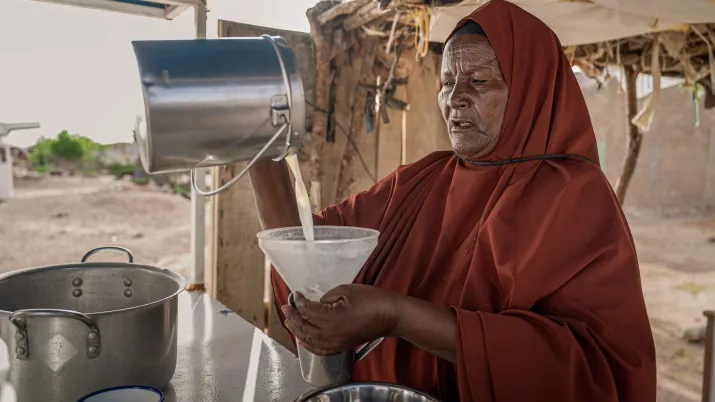
Mauritania: “Quality maternal health requires blood transfusion capability”
Published on May 28, 2025
Publications & Media
Key figures
-
€385 million committed to ongoing projects in 2025
-
39 projects under implementation in 2025
-
63% of financing dedicated to climate change adaptation in 2025