
Share the page
Fiji
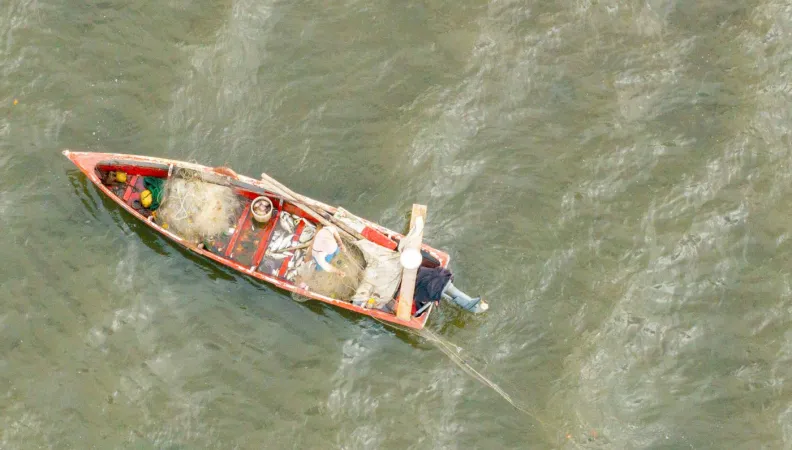
The second largest economy among the Pacific Islands, the Fiji archipelago has a population of nearly one million, whose daily lives remain deeply rooted in community bonds. Since opening its office in Suva in 2024, Agence Française de Développement (AFD) has been structuring its operations in Fiji around three strategic priorities: strengthening climate resilience; preserving exceptional biodiversity on land and at sea; reducing vulnerability to natural and health risks. As a regional hub, Fiji serves as a platform for innovation and regional cooperation, benefiting from the AFD Group’s Pacific-wide initiatives.
Context
Fiji has 332 islands, a third of which are inhabited, and a population of nearly one million. Its land area of 18,333 km² is augmented by a vast exclusive economic zone of over 1.2 million km². The two main islands, Viti Levu and Vanua Levu, are home to most of the population and infrastructure. Fijian society is characterized by its cultural and ethnic diversity and remains strongly structured around communities and traditional chiefdom systems.
The second largest economy in the Pacific islands, with a GDP of $6 billion in 2024, Fiji is considered an upper-middle-income country. Highly dependent on tourism (nearly 40% of GDP), its economy remains vulnerable to external shocks and natural disasters. The country faces a double vulnerability, linked to debt and climate, which limits its ability to invest in adaptation, while the costs of adaptation are estimated at around 10% of GDP for the next decade.
A leading regional player, Fiji hosts the Secretariat of the Pacific Islands Forum (PIF) and numerous international organizations. It was the first country to ratify the Paris Agreement and chaired COP23 in 2017, underscoring its leading role in the fight against climate change.
With more than 75 years of presence in the Pacific through French Overseas Territories, AFD Group opened its first office in a foreign Pacific State, Fiji, in February 2024 to support the country's sustainable development priorities and strengthen its regional action on resilience, climate and biodiversity. In line with Fiji's National Development Plan (2025-2029) and the 2050 Strategy for the Blue Pacific, AFD Group combines regional and bilateral initiatives to offer inclusive, sustainable and local solutions. It supports a wide range of actors – from public institutions and development banks to civil society organizations and regional organizations – in order to strengthen local resilience, protect ecosystems and implement nature-based solutions on a large scale.
Our approach
We contribute to reducing vulnerabilities by building climate resilience and protecting biodiversity at the grassroots level.
In Fiji, AFD supports resilience-building through communities, villages, private and public actors, and local authorities.
Through the Fiji Development Bank (FDB), AFD contributes to the development of green and inclusive entrepreneurship. Thanks to a credit guarantee provided to this financial institution, women, young people and rural business owners have easier access to funding for their sustainable projects.
Through the Kiwa initiative, co-funded by several donors and managed by AFD, 10 nature-based solution projects support communities to restore mangroves, rehabilitate watersheds and strengthen climate-resilient livelihoods – reaching more than 15,000 people.
The Greening the Pacific Financial Systems (GPFS) project, implemented by the Global Green Growth Institute (GGGI), supports public development banks and central banks in the Pacific, including those in Fiji, to integrate climate-related risks and sustainability at the core of financial systems. These reforms help redirect capital flows towards climate-smart investments such as clean energy, resilient agriculture, sustainable housing and financial inclusion.
The Cap Rugby program, coordinated by Expertise France in partnership with the French Rugby Federation and the Fiji Rugby Union, uses sport to promote inclusion and raise awareness on climate risks.
AFD is also working with the Fijian authorities to improve access to safe and sustainable drinking water in villages, with support from French expertise. AFD is also developing to provide financial and technical support for public policies on flood risk management and the development of renewable energy, in partnership with the European Union and the European Investment Bank.
With more than 1,500 plant species, 170 bird species and unique coral reef and mangrove ecosystems, Fiji is home to an exceptionally rich natural heritage – now threatened by deforestation, pollution and the effects of climate change.
The BIODEV2030 project, implemented by Expertise France and funded by AFD, supports the integration of biodiversity considerations into public policies and key economic value chains such as kava and coastal fishing, through close dialogue between public stakeholders, businesses and local communities.
The Pacific Ocean Initiative supports the sustainable management of coastal and marine ecosystems in 16 Pacific countries, including Fiji. Involving the Secretariat of the Pacific Regional Environment Programme (SPREP), main partner, and the Pacific Community and mobilizing scientific data produced by French research institutes in the region, it is based on two pillars: regional cooperation and capacity building.
The regional SWAP (Solid Waste and Pollution Management in the Pacific) project, managed by SPREP, aims to reduce waste and combat marine pollution in order to preserve the oceans and protect biodiversity while improving the living conditions of local communities.
Fiji is one of the countries most exposed to natural hazards in the world, facing frequent earthquakes, floods, droughts and cyclones. Between 2005 and 2020, more than 80% of the population was affected by at least one major disaster. AFD supports initiatives that strengthen prevention, preparedness and response to these crises.
Through the Preparedness and Response Platform for the Pacific (PIROPS), AFD supports disaster preparedness and response in the region by providing national Red Cross societies, including the Fiji Red Cross, with the human, material and logistical resources to respond more quickly and effectively to climate and natural disasters.
The Fiji-Share project, implemented with the Louis Malardé Institute in French Polynesia, with a financial partnership with the Government of French Polynesia, is strengthening the country's epidemiological surveillance capabilities (research, laboratories, state-of-the-art equipment) to better detect and respond to mosquito-borne diseases. By supporting the Pacific Community's Pacific Public Health Surveillance Network, AFD is also helping to improve laboratories, non-communicable disease management and health worker training, while raising awareness among youth and women about the links between health, the environment and climate change.
The CRIMARIO program, implemented by Expertise France (AFD Group), aims to strengthen knowledge of the maritime domain and cooperation on the subject in the region. Through training and exercises conducted in Fiji, it helps authorities to better monitor maritime areas and combat illegal activities (illegal fishing, trafficking) and environmental risks.
Publications & media

Key figures
-
€23 M is AFD Group's portfolio in Fiji, supporting sustainable, inclusive and resilient development.
-
13 areas of action supporting an inclusive and resilient sustainable development