
Share the page
Ethiopia
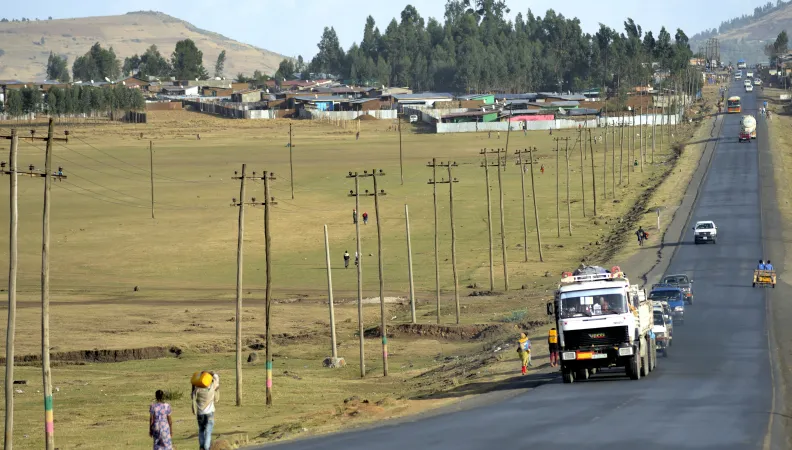
Ethiopia, a flagship country in the Horn of Africa, holds a unique position, both for its rich history and its strategic geographic location at the crossroads of Africa, the Middle East, and Asia. This position has shaped its deep historical and cultural heritage, while also contributing to recurrent regional tensions.
Covering an area of 1.1 million square kilometers, Ethiopia is the second most populous country in Africa, after Nigeria. Its population of around 125 million continues to grow rapidly (+2.5% per year) and is expected to reach 150 million by 2050. It is also one of the least urbanized countries, with less than 30% of its population living in urban areas, and the largest landlocked country in the world.
Ethiopia is consistently among the top 10 global recipients of development assistance, and the leading beneficiary in Africa. For more than 25 years, AFD has supported Ethiopia’s transformational journey toward inclusive and resilient development.
Context
Over the past two decades, Ethiopia has experienced sustained economic growth, often close to 10% per year, driven by industrialization, infrastructure development, and gradual economic liberalization. Foreign investments, particularly in agriculture and manufacturing, have contributed to a significant reduction in poverty, with the Human Development Index (HDI) rising from 0.29 in 2000 to 0.497 in 2023.
However, since 2020, these gains have been undermined by internal conflicts, which have displaced nearly 5 million people and triggered a major humanitarian crisis, especially in the north and west. Recurrent climate shocks (Ethiopia ranked 101st out of 181 on the 2022 World Risk Index) and persistent social and regional inequalities also threaten the democratic transition launched in the 1990s.
Classified among the Least Developed Countries (LDCs), Ethiopia’s GDP per capita stood at USD 1,320 in 2024, with an HDI ranking of 180th worldwide. To overcome these challenges, the country is implementing an ambitious Home-Grown Economic Reform (HGER) program supported by the Bretton Woods institutions and AFD, aiming to achieve middle-income status by 2030.
As the leading African recipient of official development assistance, and among the top ten globally, Ethiopia benefits from significant financing mainly from the World Bank and USAID — focused on health and education.
Since its establishment in 1993 and representation since 1997, AFD has concentrated its efforts on areas where it brings clear added value: macroeconomic reform support, essential services (energy, water, sanitation), agriculture and biodiversity, and heritage preservation.
Within the AFD Group, Expertise France contributes through technical assistance, while Proparco provides growing support to the private sector. All operations in Ethiopia fall under the East Africa Regional Office.
Our approach
AFD and Ethiopia: Driving a deep economic transformation for inclusive and sustainable growth
AFD focuses its work in Ethiopia on expanding access to energy, water, sanitation, and modern public transport, while strengthening the institutions that provide these essential services. With nearly half of Ethiopians still lacking access to electricity, AFD partners with Ethiopian Electric Power (EEP), a long-standing ally, through the RISED integrated project, which combines infrastructure development, institutional capacity building, and vocational training to ensure the long-term sustainability of the power network. Through peer-to-peer partnerships, AFD has become the leading bilateral partner in Ethiopia’s energy sector.
In response to rapid urbanization (with 70% of the population still living in rural areas), AFD also finances the Addis Ababa bus network and several urban development projects, including in secondary cities. In addition, it supports heritage cooperation through the restoration of iconic historical buildings, helping preserve Ethiopia’s rich cultural legacy.
Since 2019, the Ethiopian government has been implementing a broad liberal economic reform program, further strengthened in 2024 to boost private sector growth and job creation. The AFD Group supports these reforms through budget support loans and technical assistance, focusing on state-owned enterprise performance, public–private partnerships, financial sector liberalization and supervision, tax mobilization, and public service modernization.
In co-financing with the European Union, AFD has tasked Expertise France with implementing a program to simplify the regulatory and financial framework for SMEs and startups. A targeted initiative in the menstrual hygiene product sector also aims to build a local, high-quality, and affordable value chain.
AFD has supported Ethiopian Airlines (training center, cargo terminal) and now prioritizes investments fully aligned with the Paris Agreement. In the agriculture sector, AFD collaborates with the Agricultural Transformation Institute (ATI) to promote innovation, access to credit, coffee sector development, and irrigation expansion.
Since 2017, Proparco has invested €27 million in industry and tourism, contributing to Ethiopia’s sustainable and inclusive economic transformation.
The reform agenda launched by Ethiopia in 2019 included political liberalization and the strengthening of civil society. AFD supports this process through a dual approach: helping to modernize the public agency (ACSO) responsible for overseeing Civil Society Organizations (CSOs), and providing support to CSO networks active in human rights, access to justice, gender equality, and media freedom.
Since the Pretoria Agreement of 2022, which ended the conflict in Tigray, AFD has sought to contribute to national reconciliation efforts — supporting the transitional justice process, the Ethiopian Human Rights Commission, and initiatives aimed at the reintegration of former combatants into the agricultural sector.
AFD also promotes climate resilience, supporting family farming and agroecology in partnership with Inter Aide, groundwater management in Dire Dawa with BRGM, and biodiversity conservation in Maze National Park with the Hailemariam & Roman Foundation.
In the field
Below, find the country's projects, news, publications, and contact details in one click.
Projects
News & Press Releases
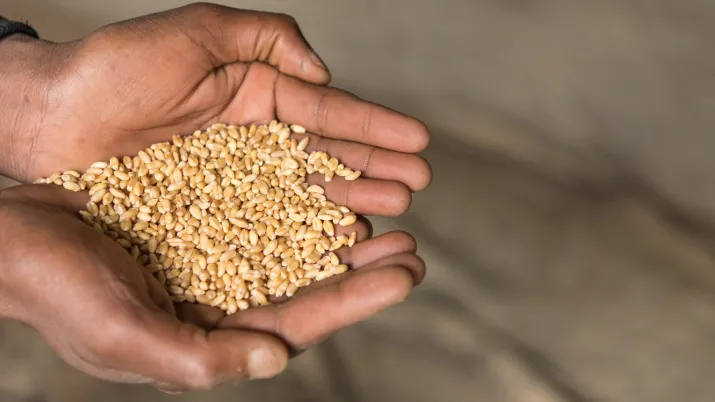
In the Horn of Africa, pastoralism helps preserve land and strengthen food sovereignty
Published on August 20, 2026
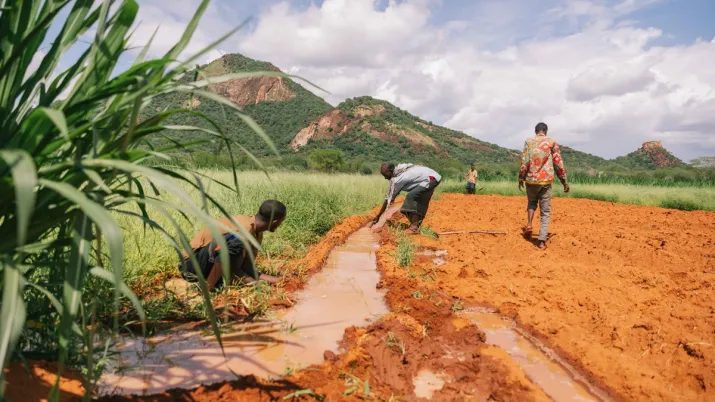
Africa–France academic partnerships (PeA) program: Five new recipients
Published on December 12, 2025

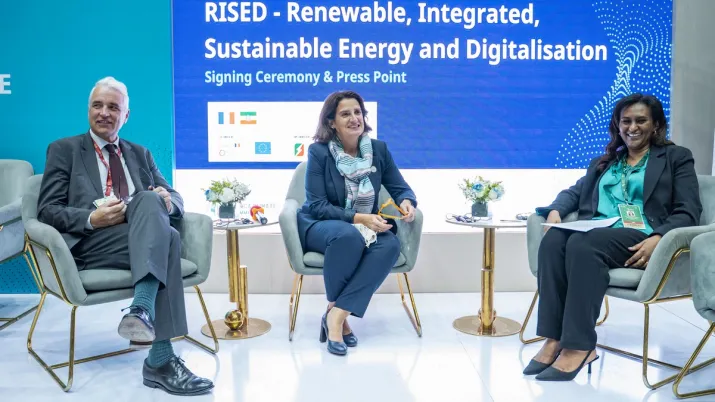
European Union, France and Ethiopia Sign €120 Million Flagship Agreement to Modernise Power and Digital Inf...
Published on September 8, 2025
Key figures
-
171 million euros in new financing in 2024
-
46 projects under implementation, totaling €621 million committed as of mid-2025
-
45.8% of AFD’s commitments have a climate co-benefit
-
56.8% of AFD's committments have contributed to advancing gender equality since 2019