
Share the page
Tunisia

Agence Française de Développement (AFD) has been present in Tunisia since 1992, supporting the country on its path toward more inclusive and sustainable growth. Over nearly 35 years, AFD has backed around 200 projects representing close to €4 billion in financial commitments. AFD's work focuses on developing human capital through education, employability support, entrepreneurship, and healthcare, while improving the level and accessibility of infrastructure for all, and supporting urban and rural territories across Tunisia. This long-term partnership has established AFD as a key player in the country's development and a cornerstone of French diplomacy in favor of climate action and social inclusion in Tunisia.
Context and AFD's strategy
Situated between the Mediterranean and the Sahara, Tunisia is the smallest state in the Maghreb, with a population of nearly 12 million. The country benefits from a recognized human capital base and a historically open and diversified economy built on a range of sectors including agriculture, manufacturing, services, and tourism.
Tunisia's economy has posted modest growth in recent years, with real GDP growth estimated at around 1.6% in 2024. The economy remains heavily dependent on the European Union, its primary trading partner, which accounts for 70% of Tunisian exports. Employment remains a major challenge, with unemployment affecting young people in particular and standing at around 16.2% in 2024, with even higher rates among those under 25.
Against this economic and social backdrop — marked by challenges in growth, employment with an emphasis on human development and youth (education and training), competitiveness, the energy transition, and sustainable natural resource management — far-reaching structural reforms are underway to strengthen the resilience of communities and territories.
Present in Tunisia since 1992, AFD is a key development partner for the country. AFD Group operates across strategic sectors aligned with Tunisia's development priorities and supports several flagship projects throughout the country. Today, 83 projects are underway, representing a total portfolio of €2.14 billion, spanning public financing, private sector support, and technical cooperation. This work is carried out in ongoing dialogue with national authorities, civil society, and local partners including the private sector, for the benefit of all Tunisians.
AFD's actions aim to strengthen Franco-Tunisian cooperation through concrete financing and shared expertise. AFD Group's recent commitments reflect its central role in supporting Tunisia's sustainable development. In 2024, €138 million in new financing agreements were signed. On the economic front, AFD Group supports public policies aimed at promoting employment, entrepreneurship, and innovation.
AFD supports the productive sector through targeted instruments for SMEs, microfinance, and digital transition. Through policy dialogue, on-the-ground technical presence, and support for structural initiatives, AFD Group reaffirms its commitment to building collaborative, sustainable, and resilient solutions alongside Tunisia.
AFD's Tunisia office is directly attached to the North Africa regional office.
AFD’s office in Tunisia has been alerted to fraudulent letters and emails sent to Tunisian companies and individuals that falsely claim to originate from AFD. These messages invite recipients to apply for a purported entrepreneurship support program in Tunisia and request banking and business documents.
As a reminder, AFD never contacts companies or individuals directly as part of its financing programs, nor does it request money in exchange for information or documentation.
AFD urges professionals and members of the public to exercise the utmost vigilance and not to respond to these unsolicited requests. We also encourage you to read the following page carefully: Fraud Alert
Our approach
AFD and Tunisia: supporting employment and balanced regional development
Tunisia faces chronic water shortages. The situation is exacerbated by climate change and growing demand for water, as well as aging infrastructure and inefficient water management.
AFD’s work in Tunisia focuses on soil conservation and the sustainable use of water resources. More broadly, AFD works with water sector partners to improve sanitation systems and secure, strengthen, and expand water supply infrastructure across the country.
AFD teams support the National Sanitation Utility (ONAS) in extending and upgrading sanitation networks in underserved neighborhoods. Recent financing agreements have also been signed with the National Water Distribution Utility (SONEDE) to secure access to drinking water in major urban centers, representing a total commitment of €68 million.
These interventions aim to reduce regional disparities and support local authorities in implementing projects that promote more equitable access to infrastructure and public services.
The Mediterranean under pressure
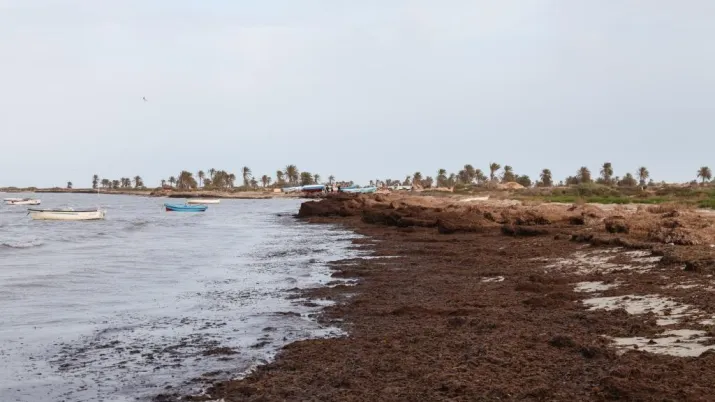
The Mediterranean Sea carries one-third of global maritime trade and is heavily affected by industrial discharges and household waste. As a result, it is considered one of the most polluted seas in the world.
To address this challenge, AFD finances the “Depollute the Mediterranean” program and a marine ecosystem protection program implemented in partnership with WWF and FFEM through the Blue Carbon Facility.
In Tunisia, access to the labor market remains a major challenge. AFD Group supports Tunisia in strengthening its human capital by backing public policies in education, vocational training, and employability. Particular attention is given to young people to promote access to employment and job creation.
AFD has supported the sector since the late 1990s, helping strengthen 28 vocational training centers. Beyond financing educational facilities and equipment, AFD supports the reform of Tunisia’s national vocational training system to better align it with labor market needs and strengthen pathways from education and training to employment, with a particular focus on young people facing the greatest barriers to employment.
Programs implemented by Expertise France also help improve the employability of young Tunisians. The ELIFE program (Emploi et Intégration des Jeunes dans les Filières Économiques locales – Employment and Integration of Young People into Local Economic Sectors), implemented in the governorates of Béja and Tozeur, supports young people in accessing employment or starting a business in local economic sectors, in coordination with local economic actors.
To this end, partnerships between Tunisian and French organizations working in training and employment are encouraged. The aim is to develop high-quality training programs that respond to the needs of businesses and future employers, while improving young people’s access to employment.
Decentralization is a key policy tool for supporting Tunisia’s ongoing transition and reducing regional inequalities, particularly in the country’s inland regions.
AFD supports this decentralization process and works across the country, in both urban and rural areas. Its objective is to promote sustainable regional development and improve access to essential infrastructure and services.
AFD’s work in Tunisia includes:
- Supporting national authorities in developing an equitable urban development policy,
- Helping local authorities strengthen their investment capacity,
- Supporting participatory development programs in rural areas,
- Developing the transportation sector,
- Contributing for the past 20 years to the rehabilitation of more than 300 underserved neighborhoods by cofinancing the Urban Policy Support Program (PROVILLE),
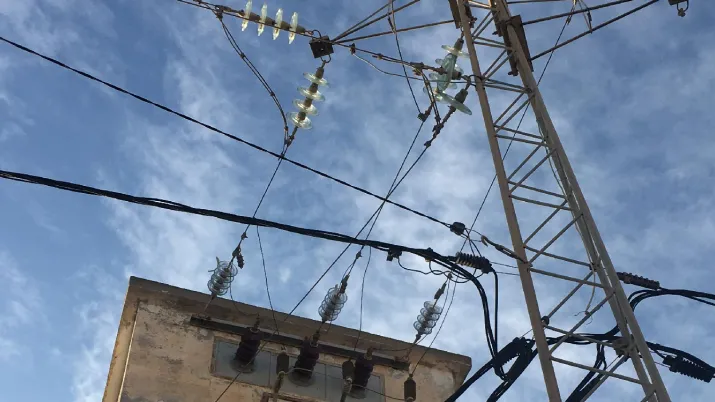
- Supporting operators in the water and sanitation sectors, such as SONEDE, to expand access to drinking water in rural areas, and in the energy sector, such as STEG, through €120 million in financing for the Smart Grid project, which will deploy around 500,000 smart meters in the regions of Sfax, Sousse–Sidi Bouzid, and Le Kram–Béja.
At the same time, Proparco, AFD Group’s private sector financing arm, is financing the photovoltaic solar power plants in Tozeur and Sidi Bouzid, developed by the independent power producer Scatec.
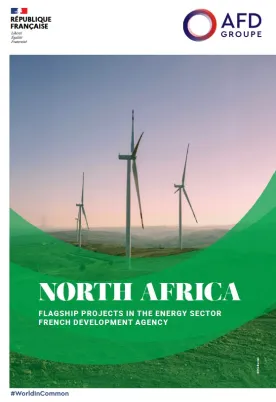
These projects support Tunisia’s decarbonization ambitions and its goal of increasing the share of renewable energy to 35% of its energy mix by 2035.
More than one-third of Tunisians depend on agriculture. Yet the sector is highly water-intensive, even though Tunisia is one of the countries with the scarcest water resources in the world. This is why soil conservation and the sustainable use of water are a key focus of AFD’s work in rural areas.
To address these challenges, AFD works to:
- Optimize water management, including wastewater and rainwater treatment,
- Promote water-efficient and environmentally sustainable agricultural practices,
- Strengthen agricultural value chains.
To improve the sustainability and resilience of the agricultural sector, Expertise France implements two flagship programs:
- PRIMEA (Programme d’Investissements pour la Modernisation des Exploitations Agricoles – Investment Program for the Modernization of Agricultural Holdings) supports the modernization of Tunisian farms by facilitating access to productive investments, encouraging the transition to agroecological practices, and improving the competitiveness of agricultural value chains.
- EFOR (Émancipation des Femmes et des Organisations Rurales – Empowering Women and Rural Organizations) aims to strengthen the economic and social empowerment of women in rural areas and build the capacity of farmers’ organizations and women’s groups across Tunisia’s agricultural regions.
Together, these two programs contribute directly to food security and help Tunisia’s agricultural sector adapt to climate challenges.
In the field
Below, find the country's projects, news, publications, and contact details in one click.
Projects
News & Press Releases
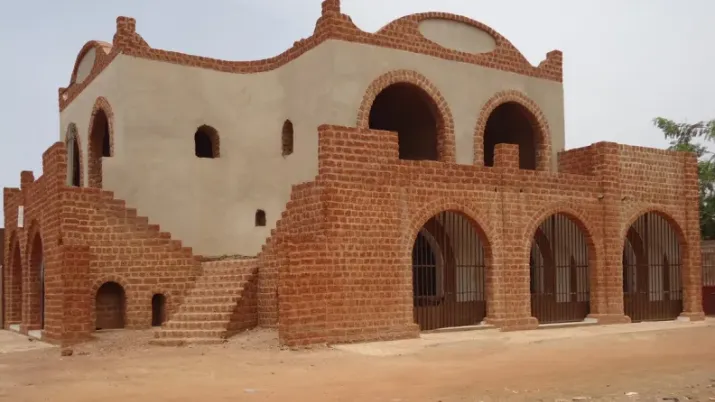
Climate change: a MOOC for more sustainable construction in the Mediterranean
Published on September 7, 2026

Publications & Media
Key figures
-
1.5 million people have gained access to drinking water or sanitation services
-
1,200 underserved neighborhoods rehabilitated
-
83 projects under implementation