Share the page

Reconciling protection efforts with heritage promotion in Xianju National Park
Project

-
Project start date
-
Status
Ongoing
-
Project duration
-
20 years
-
AFD financing amount
-
€ 75 000 000
-
Country and region
-
Location
-
Xianju
-
Type of financing
-
Beneficiaries
-
Xianju local authorities
-
Type of beneficiary
-
State
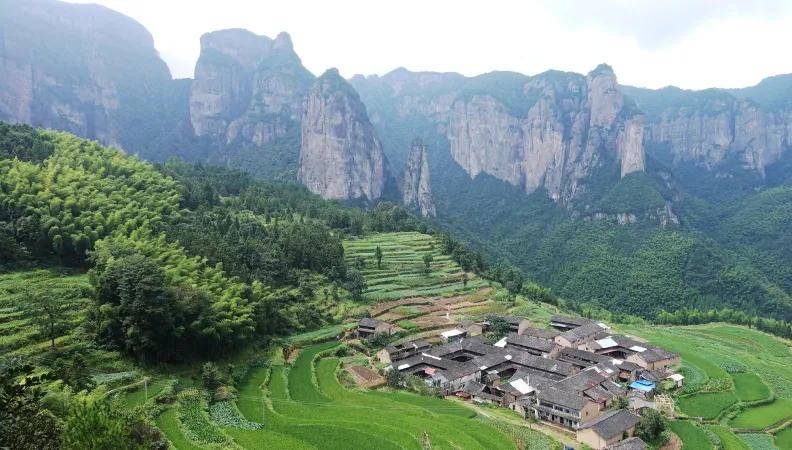
Drawing on the French model for nature park management, Xianju National Park intends to establish a new management model for protected areas combining the preservation of natural and cultural heritage with development issues for local communities.
Context
China has initiated a vast reform of protected areas in order to address climate change issues and preserve the country’s rich biodiversity. Xianju, “Home of the Immortals”, is located in the south-east of Zhejiang province, 350 km south of Shanghai. Located in a mid-altitude mountain area, it is home to 300 km2 of unique geological and landscape heritage. Recent road development has facilitated access to the area and led to the enhancement of the first tourist site in 2013. In 2014, it became the location for the first national park pilot project, with support from AFD.
Description
This project includes the following actions:
- conservation and restoration of the park’s biodiversity and landscapes, including forest ecosystems and geological formations;
- development of ecotourism, revitalization of isolated villages and improvement of living conditions for inhabitants;
- implementation of an effective park management system based on the French nature park model.
At AFD’s initiative, a partnership was established between the Ballons des Vosges Regional Nature Park in France and Xianju District. The partnership has helped advance work in a wide range of areas, including visitor management, the protection and enhancement of remote villages, environmental education for young people, and park governance. French-Chinese teams are also working to remediate soil contaminated by former lead mines and develop the ecomuseum.
French expertise is also contributing to the project. Poma is supplying two cable cars serving two major ecotourism sites in the nature park, while several French consulting firms and organizations are providing technical assistance, including Oréade-Brèche, Phytorestore, BRGM, ECOCERT, Grand Angle, Ineris Development, LPO, and the Paris Natural History Museum.
Impacts
- Ecological restoration and natural and cultural heritage preservation;
- Development of ecotourism throughout the territory, resulting in additional economic benefits for inhabitants;
- By combining housing, economic activities and nature preservation activities in the same territory, the project illustrates a new territorial organization model enabling humans to coexist harmoniously with their natural environment.